
Winter 2005 Newsletter
Photo Gallery
Computing Knee
In today's world everything is computer driven, from your TV to the family car, all things are monitored and operated by a micro-processor computer system. Now prosthetic knees join the hi-tech revolution.
From the early years of prosthetic knees, the simple act of walking has required great concentration and strength to control the knee. This was just on level ground at a slow walking pace. Now throw in a ramp, slope or steps and the task has just become many times harder or for some impossible.
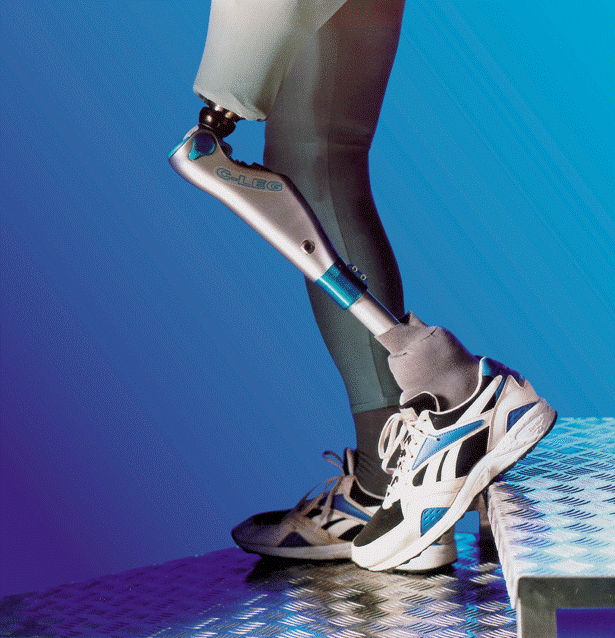
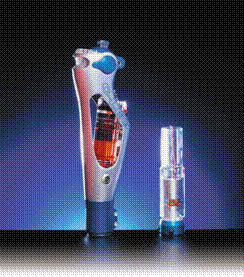
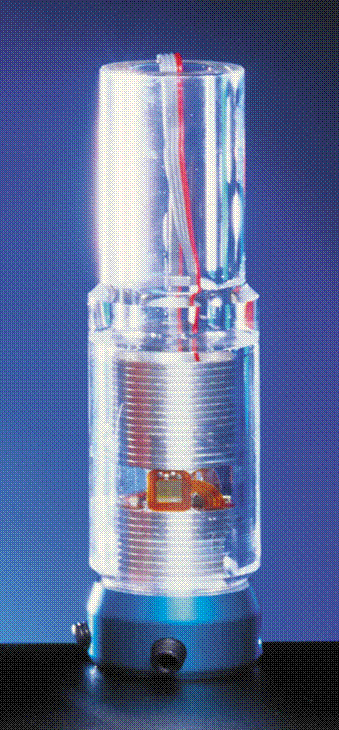
There are now several types of computer aided prosthetic knees available for amputees to help with the many difficulties faced in everyday activities. One such type of knee is the C-Leg from Otto Bock Healthcare. The C-Legs on board computer does the thinking to insure the leg is ready for the patient’s next step. Through the use of real time gait analysis, the C-Leg controls hydraulic swing and stance phase resistance. Built in sensors in the knee and ankle provide information to the computer at a rate of fifty times a second to determine the exact phase of the patient’s gait.
With this information, the microprocessor then makes instantaneous adjustments to the knee function, using algorithms developed from studies of how thousands of people walk, fine tuning it for he wearer’s unique needs and characteristics
For example, data from the knee angle sensor is used to adjust dynamic swing phase control to match the wearer’s gait any time they change walking speeds.
Additionally, a force sensor located at the ankle detects heel and toe loading and relays the data to the computer to determine when it is safe and efficient to transition from stance to swing phase.
An additional feature of the C-Leg is the ability for the wearer to select between two preset options, programmed by the prosthetist for particular activities. One is normally set for regular daily general use, while the second is set for specific activities such as cycling. The optional setting is achieved by simple intentional taps of the foot to engage and disengage the option, a beep and a vibration of the knee confirms the change in function.
Benefits of The C-Leg
Microprocessor controlled knee units have been available for quite a few years now. The C-Leg is the first to encompass both swing and stance phase hydraulic fluid control. Over the years many studies have been done to determine the benefits of computer controlled prosthetic knee joints to those utilizing traditional mechanical control.
One of the most interesting results from the various studies is that the use of microprocessor controlled knees reduces oxygen consumption by between 4 and 7 percent, depending of the walking speed of the wearer. A reduction in oxygen consumption results in amputees being able to walk longer distances while being less tired doing so.
More information about the studies on the C-Leg can be found on Otto Bock’s website at
www.ottobockus.com/products/C-leg_benefits.pdf
or:
www.ottobockus.com/products/C-leg_energy.pdf
Patient Reaction
Some of our patients who have been fitted with the C-Leg have given us valuable feedback as to their beneficial gains using the knee.
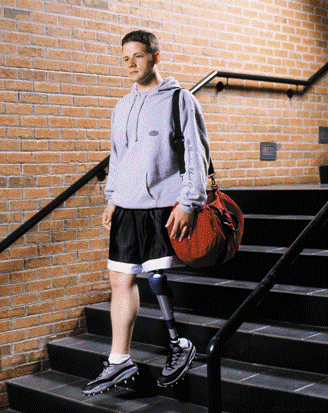
One of the most common statements from our C-Leg users is that the knee “feels so much more stable than my previous knee”. Another common reaction is “I don’t have to think about each step, like I used to have to do, the knee is there for me”. “It feels
more natural, especially walking down ramps and slopes”.
The C-Leg is also programmed to provide stability for the wearer to descend steps in a step over step gait. While being a good option for active, healthy amputees, it is also a great option for bilateral less active amputees. It is possible for wearers to increase in ability by one activity level.
The C-leg is programmed by being linked to a computer in the prosthetist’s office and is tailored to fit each individual patient’s walking characteristics and stability needs. These settings can be changed by the prosthetist at any time to suit changes that the amputee may have developed in strength or demands.
The computer is operated by a rechargeable battery that is charged on a daily basis similar to a cell phone. If the battery does run low on power while being used the knee defaults to a safe mode functioning similar to a standard knee system.
Support Group Contacts
Looking for a support group or to have contact with other area amputees?
Listed below are some organizations that can provide help and a way to talk with others in similar situations. You may just want to discuss problems faced or challenges met.
Amputee Success Network
Contact: Robyn McGrail
Tel: (513) 245-0253
Tri-State Amputee Support Group
Contacts: Richard Friend, Tel: (513) 677-0048
Teresa Bryant, Tel: (513) 825-7929
Meetings held 2nd Thursday of each month at 6.30pm.
Venue: Church of the Savior UMC
(Near Bethesda North Hospital)
8005 Pfieffer Road
Montgomery, OH 45242
Useful Internet Sites
 Print
Print 